Home Security Systems Cape Town — Complete 2026 Buyer’s Guide

Alarm Systems Cape Town — Complete Installation Guide for 2026
Your alarm system is the brain of your home security. It’s the one layer that connects everything — the sensors on your doors, the motion detectors in your passages, the panic button next to your bed, the siren on your roof, and the armed response vehicle that shows up when something goes wrong.
But an alarm system is only as good as its installation. Get the sensor placement wrong, skimp on battery backup, or choose the wrong monitoring option, and you’ve spent money on something that won’t protect you when it counts.
This guide covers everything Cape Town homeowners and business owners need to know about alarm system installation in Cape Town — from choosing the right system to sensor placement to the all-important load-shedding question.
Wired vs Wireless Alarm Systems
The first decision is wiring. It affects everything else — cost, reliability, aesthetics, and future flexibility.
| Factor | Wired | Wireless |
|---|---|---|
| Installation cost | Higher (R6,000–R12,000) | Lower (R4,000–R8,000) |
| Reliability | Excellent — no signal interference | Good — depends on battery + signal range |
| Battery life (sensors) | N/A (panel-powered) | 2–5 years per sensor |
| Best for | New builds, renovations, commercial | Existing homes, rentals, quick installs |
| Future expansion | Limited by existing cables | Easy — just add sensors |
| Aesthetics | Cables visible unless chased into walls | Clean, no cables |
For most existing Cape Town homes, wireless is the practical choice — no chasing cables into plaster, no drilling through mahogany window frames. For new builds or major renovations, wired gives you rock-solid reliability with no batteries to change.
Key Components of a Modern Alarm System
A proper alarm installation isn’t just a control panel and a couple of door contacts. Here’s what a professional setup includes:
Control panel with cellular backup. This is the heart. It must have a built-in SIM slot for Vodacom or MTN — ADSL and fibre connections go down when you need them most. A good panel like the Paradox Digiplex or Ajax Hub costs R2,500–R5,000.
Door and window contacts. Magnetic reed switches mounted on entry points. Standard contacts cost R150–R400 each. Recessed contacts (hidden in the door frame) cost R300–R600 each but look cleaner.
Passive infrared (PIR) motion sensors. These detect body heat in designated zones — passages, living rooms, open-plan areas. Pet-friendly versions ignore animals up to 25kg. Cost: R400–R1,200 each.
Indoor siren. 120dB minimum inside the house to scare off intruders and alert occupants. R300–R800.
Outdoor siren. Flashing LED + 130dB siren on the roof or wall visible from the street. Acts as a neighbourhood deterrent. R600–R1,500.
Panic button. Hardwired or wireless panic button near the bed and at key entry points. R400–R800.
Backup battery. This is non-negotiable in South Africa. A 12V 7Ah sealed lead-acid battery gives 8–12 hours of standby. With load-shedding stages 4–6 still a reality in Cape Town, consider upgrading to a larger battery or connecting the panel to a dedicated UPS. Cost: R400–R1,500.
See how load-shedding affects your security system for the full breakdown of backup requirements.
Alarm System Installation Cost in Cape Town
| System Type | What’s Included | Installed Price |
|---|---|---|
| Basic wireless (4 zones) | Panel, keypad, 2x door contacts, 1x PIR, indoor siren, backup battery | R4,000–R6,500 |
| Standard wireless (8 zones) | Panel, keypad, 4x door contacts, 2x PIR, indoor + outdoor siren, backup, cellular module | R7,000–R11,000 |
| Commercial wired (16+ zones) | Panel, multiple keypads, 8+ contacts, 4+ PIRs, outdoor siren, cellular backup, integration with CCTV | R15,000–R30,000+ |
Monthly armed response adds R200–R600 per month depending on the company and response area. Most Cape Town armed response providers cover the Cape Metro within 15–25 minutes.
Sensor Placement — Where They Actually Need to Go
Bad sensor placement is the most common installation mistake. Here’s the professional playbook:
Door contacts go on every entry door — front door, back door, garage side door, sliding doors, and any door from the garage into the house. Burglars often come through the garage after lifting the garage door manually.
PIR sensors go in the passage — not in the living room. The passage is where everyone walks when entering a home. A single PIR covering the main passage covers the bedroom wing, bathroom access, and the route to the kitchen. One well-placed passage PIR does more than three room-specific ones.
Window contacts on accessible windows — ground floor windows, especially at the back of the house and side passages. Second-floor windows are low priority unless there’s a flat roof or balcony below them.
Panic button by the bed — not in the kitchen. When an intruder is inside, you won’t be in the kitchen. You’ll be in your bedroom with the door locked.
Cape Town specific: properties in terms like Durbanville, Bellville, and Stellenbosch often have large gardens with outbuildings. Treat the garage, garden shed, and staff quarters as separate zones with their own contacts.
Monitoring Options — What Actually Happens When the Alarm Goes Off?
Three monitoring models exist in Cape Town:
Self-monitoring. The alarm sends a push notification to your phone. You decide what to do. Zero monthly cost but zero response.
Armed response. The alarm signals a monitoring centre. The centre calls your contact list first (usually 2–3 numbers). If nobody answers or confirms a false alarm, they dispatch a response vehicle. R200–R600 per month.
Video verification. CCTV cameras trigger on the alarm and send 5–10 second video clips to the monitoring centre. The operator can see it’s a real intrusion and dispatch immediately without calling first. This halves response time. Requires integration between your alarm and CCTV system.
Video verification is the best option in Cape Town. False alarm fines from the City of Cape Town are R500+ per incident — video verification eliminates 90% of false dispatches.
Existing Alarm Systems — Upgrade or Replace?
If your Cape Town home already has an alarm system installed but it’s more than 6–8 years old, here’s what to check:
- Cellular communicator — does it have one? If not, it’s useless when fibre or ADSL goes down. Add a cellular module for R1,500–R2,500.
- Backup battery — when was it last replaced? Sealed lead-acid batteries last 3–5 years. A dead battery means the system won’t work during load-shedding.
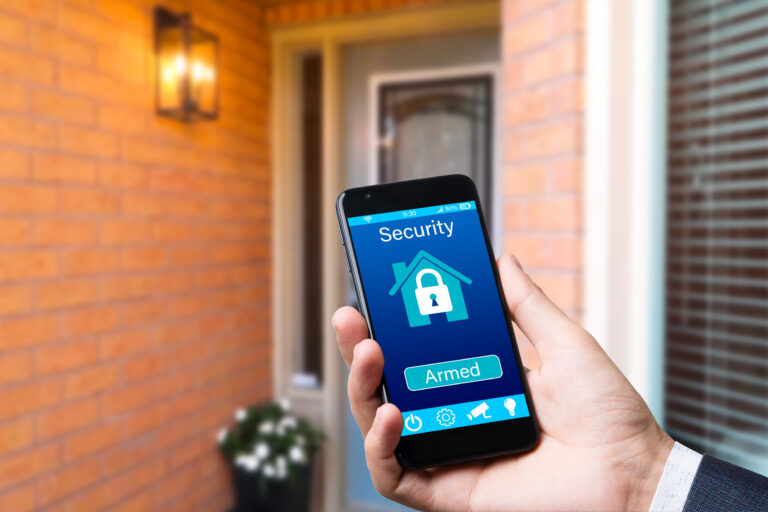
- App control — can you arm/disarm from your phone? Modern panels offer this, older ones don’t. If you have an ancient system that can’t connect to an app, it’s probably time to replace the panel.
For most older systems, a panel replacement (R3,000–R6,000) keeps your existing sensors and wiring while adding modern features. Full replacement is only needed if the wiring is damaged or the system uses proprietary sensors that aren’t compatible with modern panels.
If you’re considering an upgrade, check whether your current alarm can integrate with electric fence monitoring and biometric access control — many modern panels support both. Liberty Technologies provides complete alarm system installations across Cape Town, from Milnerton to Somerset West.
Conclusion
An alarm system installation in Cape Town is a straightforward investment in peace of mind — but only if it’s done right. Choose the right control panel with cellular backup, place sensors where they matter, and budget for battery backup and smartphone integration.
For R7,000–R11,000 installed with R300–R500 per month in armed response, you get a system that protects your home, alerts you instantly, and connects everything into one security ecosystem.
Ready for a professional installation? Contact Liberty Technologies for a site survey and itemised quote tailored to your Cape Town property.
Frequently Asked Questions
Tell us what we can do for you...

Visit Us
Unit H19
Millennium Business Park
Stellenberg Road
Parow Industrial
Cape Town

On this page
- Wired vs Wireless Alarm Systems
- Key Components of a Modern Alarm System
- Alarm System Installation Cost in Cape Town
- Sensor Placement — Where They Actually Need to Go
- Monitoring Options — What Actually Happens When the Alarm Goes Off?
- Existing Alarm Systems — Upgrade or Replace?
- Conclusion
- Frequently Asked Questions
- Tell us what we can do for you...